



Special Reports
REVISITING THE COMPREHENSIVE SECURITY ROADMAP...
JOHN DELURY, MORTON HALPERIN, PETER HAYES, CHUNG-IN MOON, LEON SIGAL, TOM PICKERING APRIL 19 2024 I. INTRODUCTION In this essay, the authors revisit the concept...
Policy Forum
DISSECTING THE WASHINGTON DECLARATION
APRIL 29, 2023 PETER HAYES I. INTRODUCTION In this essay, Peter Hayes analyzes the five key elements of the Biden-Yoon Washington Declaration; and concludes: â€...
Blue Peter
4 DECADES OF RECKONING WITH NORTH KOREA’S N...
PETER HAYES OCTOBER 30, 2022 INTRODUCTION Peter Hayes argues that “going nuclear will not help South Korea deal with the threat posed by its northern neighbor.â...
About Nautilus
Our mission: WE HOLD THAT IT IS POSSIBLE TO BUILD PEACE, CREATE SECURITY, AND RESTORE SUSTAINABILITY FOR ALL PEOPLE IN OUR TIME.
Since its founding in Berkeley, California in 1992, the Nautilus Institute has evolved into a thriving public policy think-tank and community resource. Along the way it has addressed critical security and sustainability issues such as the United States nuclear policy in Korea and the effect of the U.S.-China relationship on environmental insecurity. The Institute has built a reputation not only for innovative research and analysis of critical global problems, it also translates ideas into practical solutions, often with high impact.
The Institute convenes a community of scholars and practitioners who conduct research on strategies to solve interconnected global problems. Our Associates and Partners are located in Asia, North America, Europe, Australia and India. With our network of partner organizations and associates, we develop and apply these strategies to the linked threats of nuclear war, urban and energy insecurity, and climate change in the Asia Pacific region.
Nautilus encourages civil society to strengthen regional governance of these common problems and shared solutions.
Nautilus in the News
N.Korean kerosene sanction unlikely to be effective: Report North Korea’s domestic refinery capability and capacities enough for rocket, military use

NK News reported Nautilus’s key conclusion: “It appears likely, therefore, that the main impacts will be on households using kerosene for lighting, a small amount of cooking, and a directly proportional amount of space heating in winter time ...
Pine Gap: Nautilus Institute explores Alice Springs joint defence facility
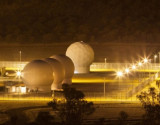
The Nautilus Institute for Security and Sustainability, led by Australian defence academic Des Ball, reveal details of the facility that few of us would know about. Richard Tanter of Nautilus Institute, said the facility essentially remained top sec ...
Recent Comments

BARRY BARON
https://www.latimes.com/archives/la-xpm-1990-06-1...
Apr 19 2024 on Toxic bases in t..
JAMES
I was in Mendoza, Argentina in 1967 with the 58th...
Apr 16 2024 on ATOMIC SPIES IN ..
Alfredo
Link for full report not working. Please update. ...
Jan 30 2024 on ENERGY SECTOR CU..
Jim Anthony
Peter Hayes - the eternal white activist. Like F...
Jan 30 2024 on Peter Hayes..
Deborah Klose
I dont know if this thread is still act 00pmive. ...
Jan 24 2024 on Cleaning up John..
Kris
Reprogramming TAMs with Anticancer Therapies:TAMs...
Aug 22 2023 on BIDEN’S COVID1..
Captain Norman P. Pourciau (Ret)
As a US Naval officer when I was an Ensign and th...
Aug 06 2023 on The North West C..